Sourcing Pop-Up Tents for South America: Five Spec Items That Decide Landed Cost
Sourcing Brief: In pop-up tents, landed cost is decided before the factory quotes — by frame mechanism, pole section and hub design. South America, where one tariff treatment spans four markets, rewards buyers who lock those three items first.
Mercosur applies a Common External Tariff across Brazil, Argentina, Paraguay and Uruguay. One validated specification can therefore be quoted once and sold into four countries without re-engineering — provided it is settled before the first purchase order.
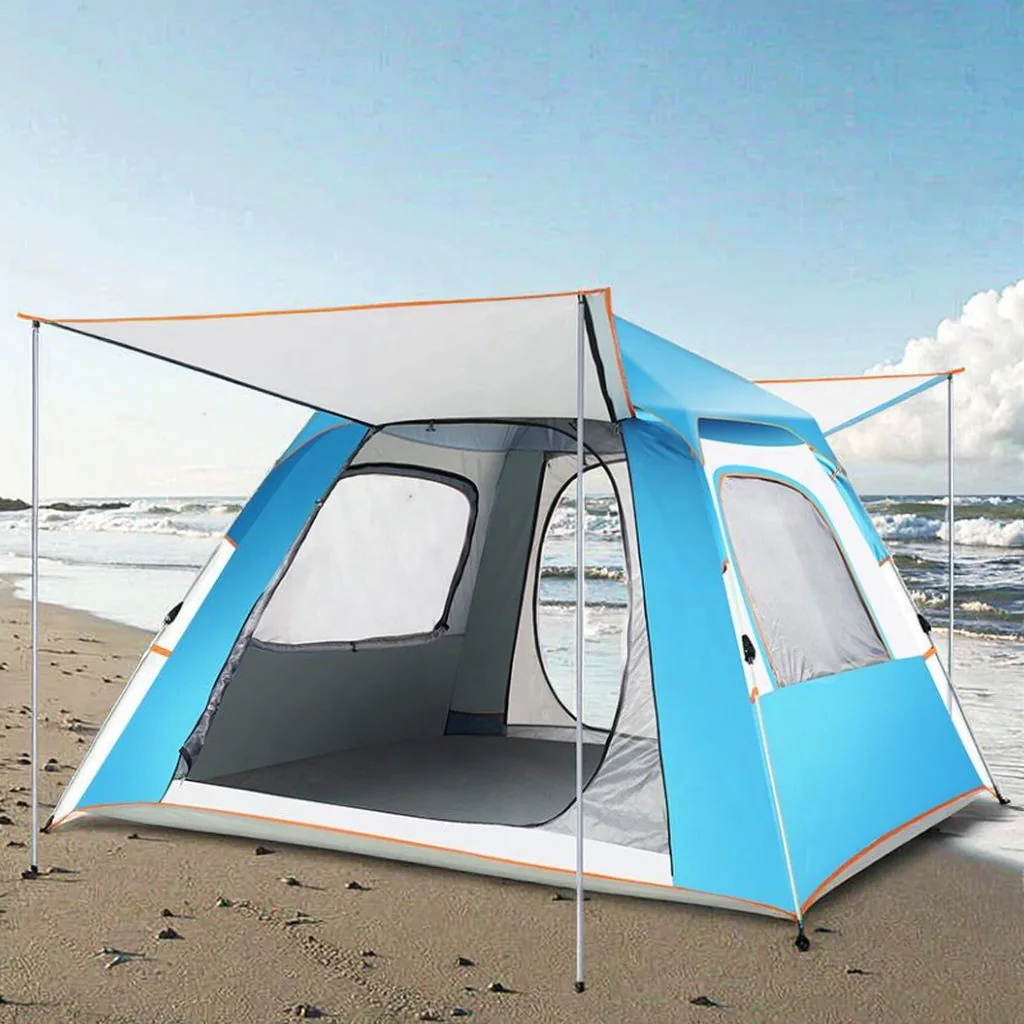
1. Frame Mechanism
Instant-pitch frames are spring-steel or fibreglass. Spring steel absorbs more opening cycles but takes a set and pulls the canopy off-square; fibreglass holds shape and cuts weight. Ask for the open/close cycle figure and test a sample to failure — a three-second pitch concentrates the load at the hub.
2. Pole Section
6.0 mm fibreglass suits promotional volume and inland weekend use. Exposed coastal and Andean campsites want 8.0 mm or above. Section diameter, not fabric, is what appears in the accident report.
3. The Hub
The hub is the most common warranty claim. Confirm glass-filled nylon and insist on metal pivot pins, not a moulded plastic boss — and ask for a fatigue test on the assembled hub, not the pole alone.
4. Fabric Coating
190T polyester is a dry-climate entry point; 210D Oxford with a silver or PU coating holds colour at equatorial UV. Confirm coating chemistry, not only hydrostatic head.
5. Container Math
Pop-ups ship compressed, so bundle diameter sets units per 40HQ. Get carton dimensions and master-carton counts before comparing FOB: a unit 15% cheaper that loads 20% worse is not cheaper.
Settle these five before sampling and a South American launch runs on one spec sheet.
Trade framework: Mercosur Common External Tariff, applied by Brazil, Argentina, Paraguay and Uruguay.