Changing Tents for Gulf Heat: Water Column, UV Coating and Sand Ingress
Technical Brief: A changing tent sold for privacy and one used as a field shower are different products. In the Gulf, where sunlight is extreme and dust storms are a documented and increasing hazard, four specifications decide whether a unit survives a season.
Buyers routinely carry a European changing-tent spec into Gulf tenders. Labour camps, coastal resorts and event sites put the same product under heat, salt and airborne quartz.
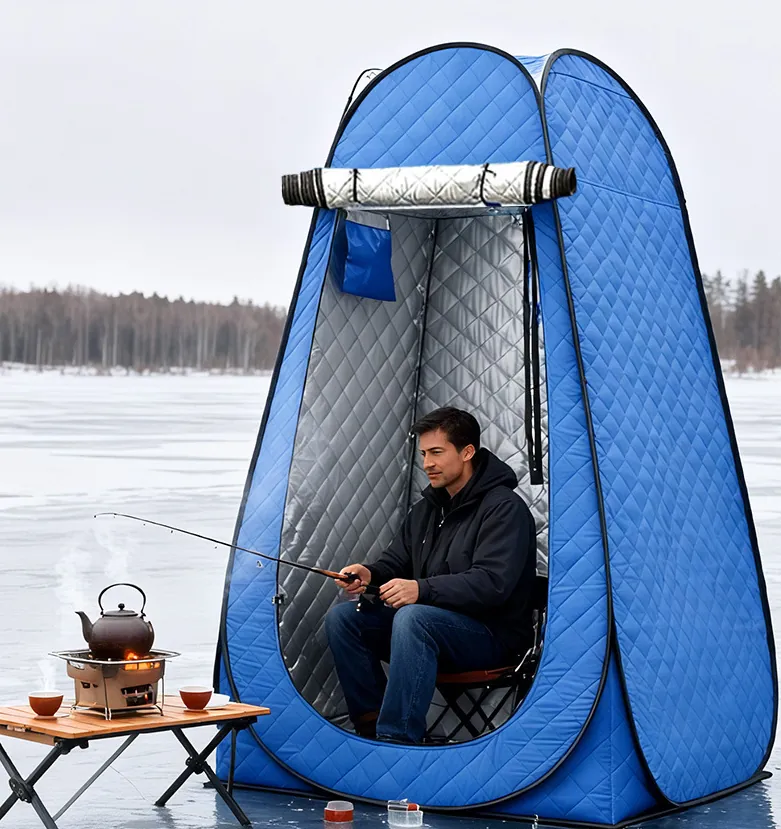
1. Water Column: Shower or Privacy Only?
A privacy-only unit holds colour at 800 mm. A shower unit needs 2000 mm or more: the load case is standing water and repeated folding, not rain.
2. UV: the Coating Fails Before the Fabric
Polyester yarn survives Gulf sunlight; the PU coating on it does not. Photodegradation shows first as tackiness, then flaking and colour loss. Ask for a xenon-arc colour-fastness report and confirm the coating carries a UV stabiliser.
3. Sand: the Zip Is the First Casualty
Quartz dust is abrasive. It lodges in zipper coils and saws through the stitching beside them, which is why zips dominate warranty claims on desert sites. Specify a covered zip with a storm flap and a heavier coil.
4. Frame: Heat Cycling and Coastal Salt
Fibreglass loses stiffness as temperature climbs, and powder-coated steel corrodes faster where humidity meets salt. For humid Gulf sites, ask for UV-stabilised resin or marine-grade coating.
Settle these four before sampling, and one spec sheet covers both the privacy and shower variants.
Regional hazard reference: multiple 2024–2025 studies document rising dust-storm frequency across the Middle East and the Arabian Gulf.