Blackout Coating Tents: OEM Manufacturing & QC Guide
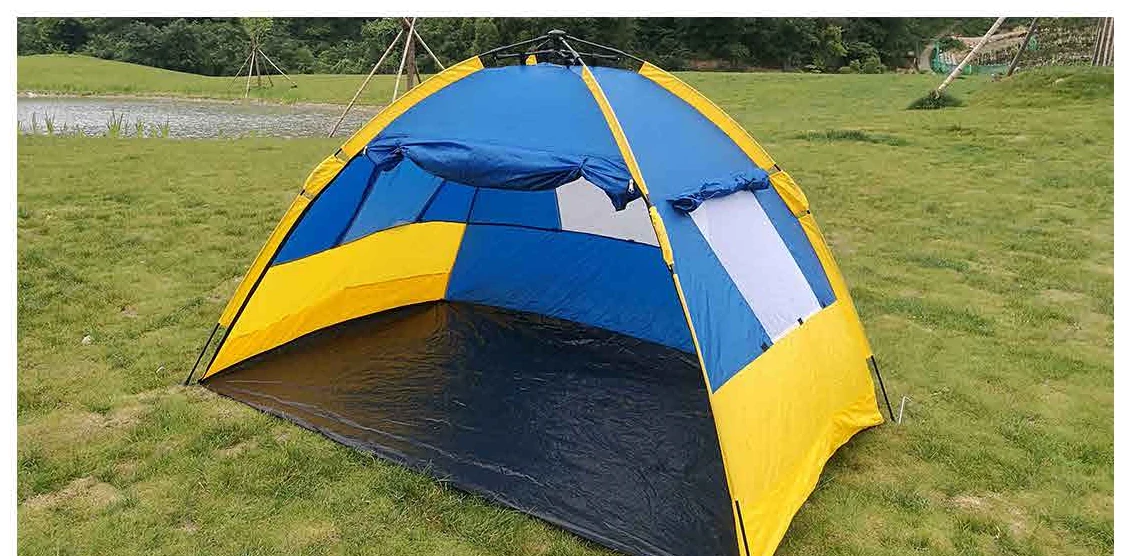
In summer camping across Europe and North America, the harshest reviews for ordinary tents rarely mention leaking. They mention being woken by piercing daylight at 5 a.m., and a cabin that turns into a stuffy oven within half an hour of sunrise. Conventional greige polyester (190T or 210T), even with water repellency and basic UV treatment, still lets 25%-35% of visible light through, and solar heat radiation passes almost unimpeded.
To solve this sleep problem, mainstream retailers such as Decathlon's Fresh & Black line and Coleman's Dark Room series, together with the upper tiers of Amazon bestseller lists, have pushed Blackout / Dark Room tents from a differentiator to a baseline requirement for mature brands.
Yet in B2B OEM sourcing, buyers comparing quotations from different Chinese factories keep asking the same questions: why does the same blackout tent cost 20% more from one factory and almost nothing from another? Why do cheap samples turn tacky, delaminate and smell after a few days in the sun? And what really separates Blackout Coating, Titanium Silver and ordinary silver coating on UPF, heat reduction, tear strength and total tent weight? This article draws on measured data from the coating and lamination workshop of Ningbo Xinqiu Tourism Products Co., Ltd. (XINQIU TENT, 20 years in B2B tent manufacturing, BSCI audited) to break down the process, the multi-layer structure, the strength-loss countermeasures and the bulk inspection standard.
1. Core Physical Structure of a Blackout Coating
So-called blackout fabric is not cloth dyed black, nor a single pass of black pigment. On XINQIU's standard OEM line, a high-grade full blackout fabric is a multi-layer functional composite system, built up coat by coat.
- Base Fabric: Usually 190T polyester plain weave, 210T high-density polyester or 150D/210D oxford, with a DWR (durable water repellent) lotus-effect finish on the face.
- White Primer Layer: A polymer white primer is knife-coated onto the reverse side first. It anchors the following layers to the base cloth and, through its high refractive index, reflects part of the visible light and infrared heat that would otherwise pass through.
- Core Carbon-Black Blocker Layer: Ultra-fine dispersed carbon black compounded with modified PU (polyurethane) seals every warp and weft micro-pore, cutting visible light transmission to a physical 99.9% for true zero light transmission day or night.
- Matte Protective Topcoat: The innermost matte film resists blocking and abrasion, stops the blackout layer from sticking to itself when the tent is folded, and shields it from sweat and skin oils.
Factory Insight: Why Cheap Single-Layer Blackout Turns Tacky After Three Months
XINQIU's engineering team warns buyers about a common shortcut: small workshops roller-coat a cheap solvent-based recycled black compound straight onto 170T or thin 190T greige, skipping both the primer and the anti-blocking topcoat. The consequences are predictable. Adhesion is poor, so after 60℃ heat and humidity inside a sea container the coating blisters and peels the moment the carton is opened. Residual solvent smells sharp in the sun and fails EU REACH SVHC screening. And with no primer cushion, fold lines crack into pin-holes that leak light. XINQIU's standard requires every blackout product to pass a 100-cycle fold and rub test plus a wash-ageing test, with a light meter confirming 0 Lux leakage.
2. Blackout vs Titanium Silver vs Silver vs Greige
To give brand buyers and product managers a clear technical basis for range planning, XINQIU compares the four mainstream sun-blocking and heat-reducing finishes below.
- Shading rate: greige 60%-70%, silver 85%-92%, Titanium Silver 90%-95%, full blackout 99.9% - genuinely pitch dark.
- UV protection: greige UPF 15-30, silver UPF 30+-50+, Titanium Silver and full blackout both UPF 50+, with UVA/UVB transmission below 0.1% on blackout.
- Heat reduction in direct sun: greige 0℃ to +2℃ (greenhouse effect), silver -2℃ to -3℃, Titanium Silver -3℃ to -5℃, blackout -5℃ to -8℃.
- Sleep experience: blackout delivers a dark-room morning instead of a grey glow at 5 a.m., and removes glare.
- Hydrostatic head: 1000-3000mm on greige, 1000-2000mm on silver, 2000-3000mm on Titanium Silver, 2000-4000mm on blackout.
- Weight and hand: blackout adds 15-25g/㎡, with a fuller drape and a heavier, denser hand.
- Cost: silver +8%-12%, Titanium Silver +18%-25%, blackout +20%-30% over greige.
The conclusion for range planning is simple. Blackout Coating is not a premium gimmick but the only finish that delivers a measurable dark-room, cooler-cabin experience, and its 20%-30% cost premium is recovered in review scores and repeat purchase on family camping and glamping models. Silver and Titanium Silver remain sensible choices for beach shades and value awnings.
3. Three Engineering Pain Points and XINQIU's Fixes
In tent manufacturing, blackout fabric is not just another roll of cloth: it changes the load paths and the sewing logic of the whole tent. Without pattern and process adjustment, return rates climb. Across tens of thousands of blackout tents delivered, XINQIU has standardised three fixes.
- Pin-Hole Light Leak and High-Pressure Water Ingress: A clear or white PU tape on blackout fabric turns every needle hole into a glowing star point in sunlight, destroying the dark-room effect. XINQIU uses a custom high-density opaque three-layer Seam Tape, applied on a temperature-controlled hot-air taping machine at a constant 180℃-200℃ to weld the needle holes shut. The seam shows zero light leak and holds 3000mm of hydrostatic pressure in driving rain.
- Tear Strength Loss From Added Coating Weight: Curing the multi-layer coating locks the weave and can cut trapezoidal tear strength by 15%-20% against greige. Ordinary fine polyester thread then splits the weave under wind load. XINQIU specifies high-tenacity spun polyester thread on all main load paths and guy-out points; it swells slightly when wet and self-seals the needle holes. Every load triangle also gets a 210D oxford reinforcement patch and bartack, so the tent holds in force 7 wind without tearing.
- Condensation Mistaken for Leakage: Full blackout blocks most light and heat exchange and has near-zero air permeability. On cold nights, moisture from sleeping bodies rises to the inner face and condenses into droplets that consumers read as a leaking tent. On every blackout programme, XINQIU's technical team builds in twin high-level Chimney Vents plus low-level side intake zip windows, using the stack effect to create micro-circulation and vent moisture out before it runs back in.
4. QC Inspection Checklist for Brand Buyers
At sample approval or pre-shipment inspection (PSI), buyers should verify four non-negotiable points.
- Backlight Test With a High-Lumen Torch (0 Lux Pin-Hole Check): In a darkened room, press a 1000 Lux outdoor torch against the coated inner face and sweep it across the panel. A compliant XINQIU panel stays fully dark outside, with no star-shaped pin-holes and no white cracking along fold lines.
- Anti-Blocking Heat Test (Simulating an Equatorial Container): Cut two 10cm x 10cm blackout swatches, face the coated sides together, load 5kg on top and hold at 65℃ for 24 hours, then cool. A compliant sample separates by hand with a flat, clean coating surface and no stringing, whitening or delamination.
- Odour and Volatile Screening (REACH / RoHS): Open a sealed new bag and smell the fabric at close range. There must be no sharp benzene, formaldehyde or sour industrial solvent note. XINQIU supplies SGS / TUV reports confirming compliance.
- Seam Peeling Test: Scratch the edge of the Seam Tape with a fingernail. The blackout tape must stay firmly bonded at industrial-grade peel strength and must not lift off in one strip.
5. Summary and OEM/ODM Customization
Blackout Coating and Dark Room Technology are the definitive answer for sun and heat control in tents, and the technical lever that lets camping brands raise price positioning and review scores. From raw material and primer formulation to blocker adhesion, black Seam Tape and vented structure, a full blackout tent tests the whole manufacturing system of a factory, not one step of it.
Ningbo Xinqiu Tourism Products Co., Ltd. (XINQIU TENT) has 20 years of OEM experience with global tent brands and is BSCI audited. The factory supplies 190T, 210T and 150D/210D oxford substrates in multi-layer full blackout, Titanium Silver and silver coating, and supports OEM / ODM Customization: sampling from drawings or physical samples, private-label silk screen and heat transfer branding, custom colour cards and small first orders for market testing.
OEM / ODM Technical Inquiries
Brand buyers and retail sourcing managers are welcome to contact the XINQIU engineering team for physical colour cards, physical test reports and a custom sampling proposal.
Contact Engineering Team